The Heart of God is not in keeping the Law – New Covenant Law #4

Wheatfield Soul

At that time Jesus went through the grainfields on the Sabbath. His disciples were hungry, and they began to pluck heads of grain and to eat.But when the Pharisees saw it, they said to him, “Look, your disciples are doing what is not lawful to do on the Sabbath.” He said to them, “Have you not read what David did when he was hungry, and those who were with him:how he entered the house of God and ate the bread of the Presence, which it was not lawful for him to eat nor for those who were with him, but only for the priests? Or have you not read in the Law how on the Sabbath the priests in the temple profane the Sabbath and are guiltless?I tell you, something greater than the temple is here. And if you had known what this means, ‘I desire mercy, and not sacrifice,’ you would not have condemned the guiltless. For the Son of Man is lord of the Sabbath.” Matthew 12:1-8 (ESV)

One of the main themes of the Gospel of Matthew is righteousness.  Matthew presumably was writing to a Jewish audience, and while he was focused on presenting Jesus as the Messiah as well as on his divinity, the emphasis on the call to what could be called a “meta-righteousness”—that is, a higher righteousness than that which was the focus of the Pharisees—is clear. Israel, who was as God’s Chosen People called to be righteous, failed in that endeavor and often was overtly rebellious. So, while my purpose is to look specifically at the Law, it seems this slight diversion is warranted.

Mercy, not sacrifice

In the above passage, Jesus directly quotes Hosea 6:6, “For I desire mercy [or steadfast love] and not sacrifice, the knowledge of God rather than burnt offerings.” And this is not the first time Jesus has quoted this verse. Earlier, in Matthew 9:10-13, we see this exchange:

 And as Jesus reclined at table in the house, behold, many tax collectors and sinners came and were reclining with Jesus and his disciples. And when the Pharisees saw this, they said to his disciples, “Why does your teacher eat with tax collectors and sinners?” But when he heard it, he said, “Those who are well have no need of a physician, but those who are sick. Go and learn what this means, ‘I desire mercy, and not sacrifice.’ For I came not to call the righteous, but sinners.” (ESV, emphasis mine)

It would seem that Jesus is addressing the same group of Pharisees, as in Chapter 12 he tells them that if they had followed his earlier advice and learned what the Hosea passage was talking about, they would not have condemned the guiltless.

There are a couple of interesting things here that are often overlooked (most teachers seem to focus on Jesus being “Lord of the Sabbath”).  First, when you look at the context and the combined verses, it seems that Jesus is using the terms “guiltless,” “sick,” and “sinners” to refer to the same people.

Next, in the Matthew 12 passage, Jesus uses 2 Old Testament analogies of  Sabbath-breaking to support his disciples picking grain on the Sabbath. He did not argue that the Law did not apply, but argues that some Law-breaking is simply acceptable, and that some law-breakers remain guiltless.

Finally, note that Jesus is not using the argument that “that was then, this is now,” implying a difference between Old and New Covenant approaches to the Law. Rather, he goes right to examples of the Jewish Priesthood, King David and the OT prophet Hosea to demonstrate that God has not changed. Reading through the Hosea context, we read of God’s judgment on the rebellious Israelites, not because of a failure to keep the fine points of the Law but for being a wicked people, failing to show mercy to other nations or even to each other. Even in the Old Testament, God was a God of mercy, preferring mercy to sacrifice and law-keeping.

Mercy, Mercy Me

It can be argued that Jesus is also equating righteousness with showing mercy.  Throughout Jesus’ teaching we can see references to Israel’s failure not in not keeping the Law, but in the failure to show mercy to sinners and to the Gentile nations. As mentioned before, Israel’s calling was to be a blessing to the nations, not to be a judge of nations. Jesus takes the baton from Israel, so to speak, completing the race by showing mercy and by fulfilling the Law.

The last post in the series dealt with the golden rule, “Do unto others as you would have them do unto you.” Here, now, we see that continued with the call to learn mercy or “steadfast love.”

We see this story continued as Jesus walks into the synagogue, still on the Sabbath, and demonstrates mercy by healing a man with a withered hand, which again breaks the technical Law of Sabbath-keeping.  When he leaves the synagogue, many follow him, and he continues to heal those who are sick, but in private, not to make any sort of point. Again, mercy rules.

Matthew makes the connection to Isaiah 42, quoting

“Behold, my servant whom I have chosen,
my beloved with whom my soul is well pleased.
I will put my Spirit upon him,
and he will proclaim justice to the Gentiles.
 He will not quarrel or cry aloud,
nor will anyone hear his voice in the streets;
 a bruised reed he will not break,
and a smoldering wick he will not quench,
until he brings justice to victory;
and in his name the Gentiles will hope.” (Matt 12:18-21 ESV)

God’s heart has never been in keeping the Law, though the Law is not without its purpose or value; rather, the God who does not change has always been a God who desires mercy, not sacrifice.  And, we see that Jesus appears to be making the distinction between the pseudo-righteousness of the Pharisees and the true righteousness of those who show—and who need—mercy.


Posted in New Covenant Law | 2 Comments

The Golden Rule Is the Law? or, “Which way to the narrow gate?”

So whatever you wish that others would do to you, do also to them, for this is the Law and the Prophets. ~Matt. 7:12

In my last post, I discussed Jesus’ “mount” teaching on the Law and righteousness, and ended with the question, if perfection is unattainable by keeping rules, then how are we to attain perfection?  Matthew 7 contains an extension of Jesus’ teaching on righteousness and the Law, and he says a number of very interesting, if not confounding, things:

  1. We will not be judged according to our actions, but on whether we judge others. This continues the concept introduced in the Lord’s Prayer that we will be forgiven “as we forgive others.”
  2. The “log in the eye” comment implies that we all have these gross imperfections which render us unable to correctly view others.
  3. Don’t throw your pearls before swine. I’m actually unsure of how this fits in the overall topic.
  4. “Seek and you shall find…”  The Father will give good things (Luke says the Holy Spirit) to those who ask.

It is at this point Jesus says, “So, whatever you wish that others would do to you, do also to them…”

Why “so?”

It seems that Jesus is trying to paint a larger picture for the Israelites than their focus on keeping the fine points of the Law. As we know from other passages, the Jews of that day saw keeping the Law as the highest good, even if that meant ignoring lepers and dying Samaritans, and pronouncing judgment (and even stoning) those who broke the rules du jour (not that different than today, come to think of it).

The picture Jesus paints is this:

  1. To borrow from Paul, “there is none righteous, no not one.”
  2. We are all blinded by our own sins, and if we dare to pronounce judgment on others, we also judge ourselves.
  3. If we want to find the “good things”—things like love, joy, peace and presumably, even righteousness—we don’t have to put others down, we just need to see the Father.
  4. If we treat others like we would like to be treated, all of the “thou shalt nots” are moot.

Love, then, seems to be the fulfillment of the Law, as opposed to keeping the Law, which when attempted by sinful people seems to only breed more sin (another point for Paul).

The rest of the chapter then seems to make sense, and the famous verses 13-14 take on a slightly different connotation in context:

“Enter by the narrow gate. For the gate is wide and the way is easy that leads to destruction, and those who enter by it are many. For the gate is narrow and the way is hard that leads to life, and those who find it are few.”

What is the “narrow” way? It is not the way of an attempted works-righteousness by keeping the rules at the expense of others, as the “holiness” traditions would have us believe. As unbelievers are quick to point out, there is no love evident in self-righteous attitudes and behaviors. It’s easy to see ourselves as “better than thou” and to pronounce judgment on the “sinners.” What is hard is to ask for mercy, then give it to others.

Jesus then continues to warn of false righteousness: Beware of false prophets, who claim to be righteous but are actually sinners. Not everyone who claims to be righteous will enter the Kingdom of Heaven. And finally, the wise build on the rock of the words of Jesus, and the foolish build on the sand of their own attempts at righteousness.

Matthew follows this with several chapters detailing miracles that Jesus performed. Then, at the close of Chapter 11 (our modern designations, of course), Jesus comments on the unrepentance of those cities who witnessed his miracles, then says

“Come to me, all who labor and are heavy laden, and I will give you rest.Take my yoke upon you, and learn from me, for I am gentle and lowly in heart, and you will find rest for your souls. For my yoke is easy, and my burden is light.”

When looked at as a whole, Jesus’ teaching on the Law is not all that confusing. The narrow way is the way of rest. It may be difficult, but not in the way that is typically preached. The yoke of Jesus is easy. However, giving up our attempts at self-righteousness is difficult.  Grace, it seems—living by the golden rule—is a very narrow gate indeed.


Posted in New Covenant Law | 4 Comments

Did Jesus “Raise the Bar” in the Sermon on the Mount? – Law 2

In my last post, I began talking about Jesus’ teachings on the Law (the Old Testament Law of Moses, not necessarily Roman or other statutes).  As I stated there, it appears from the context and his statements that he is speaking primarily to the “teachers of the Law,” who were seemingly obsessed with who was or wasn’t doing what. But Jesus is also talking to those “poor in spirit” that he mentioned at the beginning of Matthew 5, those who were burdened under the religious teaching of the day.

Obviously, Jesus drew some attention from both sides, with both leaders and common-folk seeing Jesus as one of many revolutionaries that came and went. Jesus is quick to clarify that he is not anti-law; in fact, he supports the entirety of the Law, and that he doesn’t want one iota taken from the Law until it is “accomplished.”

Furthermore, he makes it clear that “ordinary” righteousness is not enough, and neither is that of the scribes and Pharisees. Connecting the dots between Jesus’ statements, he is saying that to be “poor in spirit” (theirs is the Kingdom) is to be more righteous than those who claim to keep the law.

Matthew 5:21-48

Now he starts giving examples, the “You have heard it said … but I say …” series of statements found in Chapter 5 verses 21-48 (quote from the ESV):

Anger

21 “You have heard that it was said to those of old, ‘You shall not murder; and whoever murders will be liable to judgment.’ 22 But I say to you that everyone who is angry with his brother will be liable to judgment; whoever insults his brother will be liable to the council; and whoever says, ‘You fool!’ will be liable to the hell of fire. 23 So if you are offering your gift at the altar and there remember that your brother has something against you, 24 leave your gift there before the altar and go. First be reconciled to your brother, and then come and offer your gift. 25 Come to terms quickly with your accuser while you are going with him to court, lest your accuser hand you over to the judge, and the judge to the guard, and you be put in prison. 26 Truly, I say to you, you will never get out until you have paid the last penny.

Lust

27 “You have heard that it was said, ‘You shall not commit adultery.’ 28 But I say to you that everyone who looks at a woman with lustful intent has already committed adultery with her in his heart. 29 If your right eye causes you to sin, tear it out and throw it away. For it is better that you lose one of your members than that your whole body be thrown into hell. 30 And if your right hand causes you to sin, cut it off and throw it away. For it is better that you lose one of your members than that your whole body go into hell.

Divorce

31 “It was also said, ‘Whoever divorces his wife, let him give her a certificate of divorce.’ 32 But I say to you that everyone who divorces his wife, except on the ground of sexual immorality, makes her commit adultery, and whoever marries a divorced woman commits adultery.

Oaths

33 “Again you have heard that it was said to those of old, ‘You shall not swear falsely, but shall perform to the Lord what you have sworn.’ 34 But I say to you, Do not take an oath at all, either by heaven, for it is the throne of God, 35 or by the earth, for it is his footstool, or by Jerusalem, for it is the city of the great King. 36 And do not take an oath by your head, for you cannot make one hair white or black. 37 Let what you say be simply ‘Yes’ or ‘No’; anything more than this comes from evil.

Retaliation

38 “You have heard that it was said, ‘An eye for an eye and a tooth for a tooth.’ 39 But I say to you, Do not resist the one who is evil. But if anyone slaps you on the right cheek, turn to him the other also. 40 And if anyone would sue you and take your tunic, let him have your cloak as well. 41 And if anyone forces you to go one mile, go with him two miles. 42 Give to the one who begs from you, and do not refuse the one who would borrow from you.

Love Your Enemies

43 “You have heard that it was said, ‘You shall love your neighbor and hate your enemy.’ 44 But I say to you, Love your enemies and pray for those who persecute you, 45 so that you may be sons of your Father who is in heaven. For he makes his sun rise on the evil and on the good, and sends rain on the just and on the unjust. 46 For if you love those who love you, what reward do you have? Do not even the tax collectors do the same? 47 And if you greet only your brothers, what more are you doing than others? Do not even the Gentiles do the same? 48 You therefore must be perfect, as your heavenly Father is perfect.

This, of course, presents an interesting twist on the teaching of the Law. Up until this point, presumably, the thinking was that literal keeping of the Law was what mattered. After all, you can only regulate behavior, not intent or emotion. Unless, of course, you’re God who can see into the hearts of men.

Let’s take anger as an example. There are laws about killing and intentionally causing bodily injury to one another, but no one would even conceive of a law against hate. Sure there are “hate crime” laws, but even so, these laws apply a presumed intent after the fact of an actual injury. If you hate but do nothing about it, there’s really nothing anyone can do, and you’ve broken no laws.

Obviously, when Jesus taught this, he didn’t realize the stresses of driving in traffic, or he would have made some allowance for momentary urges to kill. Is anyone out there not guilty of at least wanting to inflict some sort of pain on someone else?  And what’s more, now we’re supposed to love them, not just avoid hating them.

Jesus seems to be making a couple of things clear. First, even if you could do a cursory job of keeping the written Law, these internal laws are beyond the realm of possibility. Find someone who claims to be free from all evil intent, and I’ll show you a liar or a sociopath. Second, righteousness is not a matter of the written Law; we’ve moved beyond the reach of Law into an area that no one has yet considered.

Chances are, everyone in the crowd is thinking the same thing we are: We’re toast. If God—who can see into our hearts—expects us to really be perfect (as He is perfect), we’re all dead men walking. (And yes, this is precisely the point Paul will make a few years later.)

Unless…

What if there was a means to righteousness that was beyond keeping the law? If the sin is beyond reach of the Law, then it logically follows that the righteousness is also beyond the Law.

New Laws, anyone?

It has been suggested that Jesus brought a new, much more stringent law than that which came through Moses, and there is some support for this thought; certainly he is talking about a higher standard. However, thinking of this standard in the same vein as the Law of Moses doesn’t mesh with the discussion of the New Covenant Law in Jeremiah 31, the goal of which is not to create a higher standard for sin:

31 “Behold, the days are coming, declares the LORD, when I will make a new covenant with the house of Israel and the house of Judah, 32 not like the covenant that I made with their fathers on the day when I took them by the hand to bring them out of the land of Egypt, my covenant that they broke, though I was their husband, declares the LORD. 33 For this is the covenant that I will make with the house of Israel after those days, declares the LORD: I will put my law within them, and I will write it on their hearts. And I will be their God, and they shall be my people. 34 And no longer shall each one teach his neighbor and each his brother, saying, ‘Know the LORD,’ for they shall all know me, from the least of them to the greatest, declares the LORD. For I will forgive their iniquity, and I will remember their sin no more.”  (ESV)

So trying once again to connect the dots, we have:

  1. The Law of Moses, which is to remain in force until such time as it is fully “accomplished.”
  2. A new standard for righteousness that is even more unattainable, except to be “poor in spirit.”
  3. A new covenant law, written on our hearts, by which we will know God (as opposed to knowing rules) and which brings forgiveness where God will no longer remember our sin.

Are not hating, not lusting, and loving our enemies the heart of God?  Of course. Jesus makes it quite clear, that the goal is for us to be “perfect, as your heavenly Father is perfect.” And if unattainable by keeping rules, then how?

That, of course, is where Jesus is taking this discussion.

About this study

While I have a certain understanding of what is called “Law and Gospel” in Lutheran circles, I have no agenda here but to work my way through some key passages discussing the Law and how we are to see it from a New Covenant perspective. This is really my own personal Bible Study, worked out as I write.

Feel free to jump in with comments and questions, as long as they are in the spirit of Bible study.


Posted in New Covenant Law | 3 Comments

New Covenant Law – 1

This is hopefully the first in a series of posts talking about a New Covenant perspective of the Law; that is to say, what the New Testament and Paul in particular say about the Law. When I talk about the Law, I’m talking about the Law of Moses, that which the Jewish people were expected to keep up until the time of Christ.  I’m not talking about speed laws, anti-trust regulations or taxation. These two concepts get confused by many people, but they really shouldn’t.  There are rules put in place by men, with penalties established by men. Then there are rules given by God and… well, you get the idea. To keep things clearer, I will try to always capitalize when talking about the Law of Moses.

Matthew 5

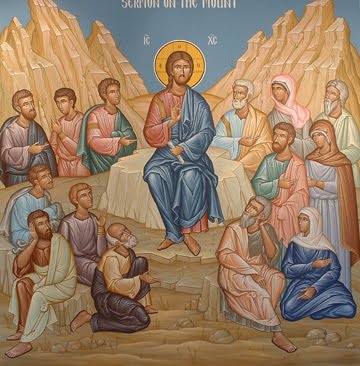
Now, while I was specifically planning on looking at Paul’s view of the Law, I really should start with Jesus, since that’s what I always tell other people to do.  The first—and perhaps the most crucial—teaching of Jesus on the Law is found in what we know as the Sermon on the Mount, found in Matthew Chapter 5, starting with verse 17:

17 “Do not think that I have come to abolish the Law or the Prophets; I have not come to abolish them but to fulfill them. 18 For truly, I say to you, until heaven and earth pass away, not an iota, not a dot, will pass from the Law until all is accomplished. 19 Therefore whoever relaxes one of the least of these commandments and teaches others to do the same will be called least in the kingdom of heaven, but whoever does them and teaches them will be called great in the kingdom of heaven. 20 For I tell you, unless your righteousness exceeds that of the scribes and Pharisees, you will never enter the kingdom of heaven.

Wow… and this is just the beginning. But let’s take a look at what Jesus is saying.

The SOTM (Sermon On The Mount)  begins with the Beatitudes (aka the “blesseds”), then the “salt and light” teaching. So far, Jesus seems to be addressing two groups of people: First, there are those, the poor and the persecuted, who need the Kingdom of God. Then, Jesus turns to Israel and Jerusalem in particular (the city set on a hill), who have failed to be the conduit for the blessings of God to the rest of the world. This was Israel’s assignment as the Chosen People—to be the means through which God would bless the whole world. But, rather than be that, the Jewish leadership has tried to keep the blessings to themselves, missing the point about why they were chosen. And, it seems from the comments throughout the Gospels that the Jewish establishment is trying to keep the blessings for those who keep the Law.

So, Jesus now seems to be addressing those who may be seeing Jesus as a counter-establishment revolutionary, who dares to ignore the Law (an accusation made a few times throughout the Gospels). He makes it clear that he is no such radical. He has not come to destroy the Law, but to fulfill it—to bring it to completion, to see it all “accomplished.” To do away with the Law undermines what Jesus has come to do. He has not come to fulfill any less than the absolute entirety of the Law, every iota, dot and tittle. And get this, the Pharisees aren’t doing it good enough.

But then he lays it out: “For I tell you, unless your righteousness exceeds that of the scribes and Pharisees, you will never enter the kingdom of heaven.”

Is this really a mandate to keep the whole Old Testament Law (and just wait for what’s coming next)? There are, in fact, those claiming to be Christians who teach just that. Is Paul in disagreement with Jesus when he said it was impossible to be saved through the Law (Gal 2:16)? Was Peter merely dreaming when he had the vision telling him he could eat pork? Or, is Jesus trying to make a different point here?

We need to keep in mind exactly what we are talking about. If, in fact, Jesus means that righteousness depends upon keeping every iota of the law, then no Christian is doing it, no matter how legalistic they may be, and I mean no one. For one thing, Paul assures us that law makes sin increase, by design, so the Law is in fact self-defeating. It’s got failure built right into it.  Jesus’ words seem to be dooming us to failure, and the next section (the “You have heard it said, but…” teachings) makes it more clear. So what is Jesus actually saying in these verses?

Stay tuned, and we’ll look into this further next time.


Posted in New Covenant Law | 2 Comments