
On how to read the Bible

On “Progressives”

I just read an interesting blog post entitled, “16 Ways Progressive Christians Interpret the Bible.”

First, a rant about how much I hate the word “progressive.”  I think it’s a terrible word. For one thing, the implications of being “progressive” is that somehow you are more advanced than non-progressives.  To that, I simply respond, “bullshit.”  Seriously, I do.  I could go on and on about self-proclaimed “progressives,” but I won’t. At various times and places, progressives have been much different than many of the ones we have today.  For example, our founding fathers were at one time progressives, but now they are not, much less revolutionary.

Another thing about the word, “progressive” is that it’s tied in with the flawed view that progress is necessarily positive, a mentality rooted in the Enlightenment, which wasn’t always as enlightened as many think.  The concept is also tied to a certain view of evolution in which, again, everything necessarily improves over time. However, I think we also see that the opposite is often the case. Without a lot of effort, things tend to fall apart.

The use of “progressive” may simply be to distinguish themselves from “fundamentalists” or other conservative extremists, which I can understand. However, there is also the implication that progressives are more educated and sophisticated, which also falls into the BS category. More educated has never meant “smarter,” and I’ve found over the years that “sophisticated” is often a fancy word for “sin.”

This is not to judge anyone in particular, who may or may not be in some advanced state of development. I’m simply talking about the word and its implications. So, it remains to be seen whether Christian “progressives” are any further along, or are just simply screwed up.  Unfortunately, many I’ve seen fall into the latter category.

Ways of reading the Bible

That being said, there are different ways to read and interpret Scripture, from the so-called “literalist” approach, to viewing all of the Bible as myth.

First, about literalism: No one reads the Bible literally, even if they say they do. They may read many more things literally than others, but that’s about it.  Sometimes, “literalism” means they also read the side notes of the Scofield Bible as inerrant. “Inerrant,” too, is a rather useless word.  It seems to have been used to draw a line between true “evangelicals” and others (progressives?).  In any event, I don’t think it’s helpful. And, oddly enough, I’ve heard some of the most twisted interpretations of Scripture coming from those who claim to believe in inerrancy. It seems that a belief in inerrancy has little to do with how much you respect Scripture. And, as the article points out, often atheists read the Bible more literally than many Christians.

On the other hand, I don’t think anyone with any real brains can seriously look at the whole Bible as myth (that is, not factual, but written to make a point). I know some who try, and try as they might, they simply can’t sound intelligent while defending this claim. The reality is, some of the Bible is meant to be taken as fact, and some of it obviously employs various literary devices to make a point.

Without endorsing everything in the article, “16 Ways Progressive Christians Interpret the Bible” provides an interesting set of points for discussion, and I think anyone who is serious about interpreting and understanding the Bible will at least appreciate the opportunity to think about this things, whether progressive or otherwise.

I have read some other “liberal” guidelines for interpreting Scripture which I couldn’t respect at all, as they were as skewed as what you’d expect from fundamentalist guidelines. The 16 points in this article, however, are at least sensible.  Take, for example, #12: “We also tend to employ a “canon within the canon” lens whereby we give greater weight and priority to certain texts over others.”  I think all of us do this already, even if we don’t realize it. Personally, I give highest priority to the words of Jesus, who is the highest revelation of God that we have.  And, I tend not to stick to the verses I understand, and let the rest work themselves out.  (One of my life rules, that my kids have heard me say a lot, is “you can only do what you can do.”)

I am sure that there are some who will have knee-jerk reactions to this and to be honest, I’m not very interested in what you have to say. But, I think this outline would make a for a very interesting discussion, and then to consider how reading the Bible differently would impact our faith.

Thoughts?


Posted in Theological Musings | 2 Comments

Learn what this means.

Twice

10 And as Jesus reclined at table in the house, behold, many tax collectors and sinners came and were reclining with Jesus and his disciples. 11 And when the Pharisees saw this, they said to his disciples, “Why does your teacher eat with tax collectors and sinners?” 12 But when he heard it, he said, “Those who are well have no need of a physician, but those who are sick. 13 Go and learn what this means, ‘I desire mercy, and not sacrifice.’ For I came not to call the righteous, but sinners.”  (Matthew 9:10-13, ESV)

5 Or have you not read in the Law how on the Sabbath the priests in the temple profane the Sabbath and are guiltless? 6 I tell you, something greater than the temple is here. 7 And if you had known what this means, ‘I desire mercy, and not sacrifice,’ you would not have condemned the guiltless. 8 For the Son of Man is lord of the Sabbath.” (Matthew 12:5-8, ESV)

Matthew records Jesus as quoting from Hosea 6:6 on 2 different occasions.  For reference, the passage in Hosea reads:

4 What shall I do with you, O Ephraim?
What shall I do with you, O Judah?
Your love is like a morning cloud,
like the dew that goes early away.
5 Therefore I have hewn them by the prophets;
I have slain them by the words of my mouth,
and my judgment goes forth as the light.
6 For I desire steadfast love and not sacrifice,
the knowledge of God rather than burnt offerings. (Hosea 6:4-6, ESV)

So, assuming this is important, perhaps it’s time we figured out what it means?

Posted in Random Thoughts | 1 Comment

I can relate—or perhaps I can’t…

You don’t have to have Asperger’s to experience an inability to relate to the Evangelical Christian culture…


Posted in Uncategorized | Comments Off on I can relate—or perhaps I can’t…

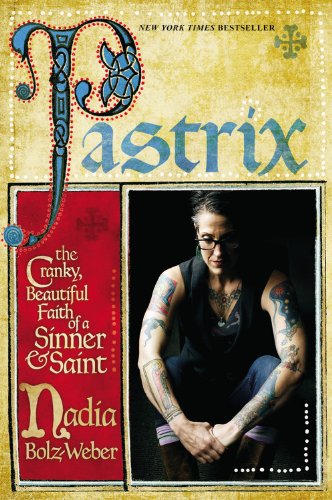
Review: Pastrix


It’s been quite a while since I’ve done any kind of book review, but this one warrants a bit of attention because it is—and it isn’t—what I expected.

Trendy and hip

Anymore, I tend to avoid books that belong in the trendy, hip, postmodern category. Been there, done that. I’ve had enough of disenfranchised, “progressive” or Bono-esque Christians who think their calling is to offend, shock, or stretch the limits of theology. So, when I first heard mention of Pastrix, I thought, “oh, Anne Lamott with tattoos,” and didn’t give the book another thought.

Except, that I knew the person who designed the cover, which is totally awesome. I remember sending JuLee a Facebook message that I’d probably buy the book just for the cover. But, I didn’t, at least right away. I have too many “spiritual” books laying around that I’ve never read.

But, as weeks went by, I kept seeing Nadia’s name pop up, and then found a video of one of her messages. It was probably one of the most grace-filled sermons I’d heard in a long time. Then I listened to a couple of more of her sermons, and found her to have a very tenacious hold on grace, which I am attracted to. So, I broke down and bought the book.

The Review

On one hand, it’s not a great book. I mean, she’s not a C.S. Lewis, and you’re not going to be impressed with either her prose or her theological brilliance (I’d say the same thing about my own book). But, Pastrix is not that kind of book.  It’s also not a typical autobiography, although it is intensely personal and autobiographical. It’s also not an angry rant against traditional evangelical attitudes, or a treatise on gay rights, or an attempt to change anything. Neither is it an attempt at self-justification, the way so many memoirs are.

It is, according to it’s book flap, a spiritual memoir. I would describe it as a confession—of a sinner who is being saved by grace, an admitted misanthrope who was called to pastor “her people” as well as a bunch of people she couldn’t relate to at all.  The book is filled with her past and present failings, and her constant discovery that grace is both challenging and essential, and that life is a process of death and resurrection.

The shocking thing…

There are a number of things in the book that many of what I refer to as “shiny, happy people” Christians will find shocking. Nadia swears like a sailor, has a very colorful past, and uses a few colorful phrases that I don’t even understand. She doesn’t edit her language for the book.  At first, you might think the “f” word is inserted throughout the text on purpose, and in spite of the fact that I believe this is her “native” language, it does seem at times self-aware. But, some of that is possibly due to an editor striving to find a balance between honesty and readability. But that’s not what I think is shocking.

There are also a number of stories about a number of people who fall into the “non-straight” categories, and the fact that Nadia’s church, the House for All Sinners and Saints, is, according to their website, “queer-inclusive.” But that also is not the most shocking thing in the book.

What is perhaps the most shocking thing is that Bolz-Weber is, of all things, a Lutheran. I mean, when’s the last time a Lutheran had a best-selling Christian book? And who would expect a tattooed, foul-mouthed ex-comedian to have such a respect for the Eucharist or baptism or the Liturgical Calendar?  She is, at the same time, both liberal and traditional.

One of the things that struck me was her talking about following the Lectionary, which is essentially a preaching schedule that prescribes what texts to preach from on any given Sunday.  She expresses concern about what would happen should she ever stray from this schedule, and allow herself to preach  on any topic she wishes, as well as her concern to stay true to the text. I could only wish that evangelical pastors could follow this example. It is clear that she does not take her role as pastor lightly, and if anything, is something of a reluctant pastor, knowing that she, on her own, is inadequate.

I imagine, for some evangelicals, the fact that she’s Lutheran will just confirm the fact that she’s not really a Christian (believe me, I’ve heard some wacko stuff through the years, being of Lutheran extraction myself).  But, she understands the gospel, and it comes through time and again. Perhaps, being someone who has admittedly been “forgiven much,” she has a much batter grasp on grace than some of us. It’s no coincidence that she has a tattoo of Mary Magdalene on her arm.

Personal reflection

I expected the book to have a certain amount of self-righteousness due her church’s acceptance of sinners of all stripes, because these kind of books often do. But, there is none of that to be found. Bolz-Weber owns up to her self-righteous tendencies, and calls sin sin, taking an extremely humble attitude, and constantly looks to Jesus as savior, healer and redeemer. I found myself having to admit that at times, my own belief in grace fell somewhat short, and I was challenged to reexamine myself. But, it’s an interesting book in that it never lets you walk away feeling anything less than loved, forgiven, and in the process of being saved.

The message of the book is not to build up Nadia Bolz-Weber in any way. Where some authors take the “this is just who I am” approach to justify who they are, Bolz-Weber never falls into that trap. She knows she is inadequate, so clings strongly to the Cross and the Empty Tomb. The message that comes through loud and clear is that the Gospel is dangerous, that it will confront you and change you. That, in the words of another friend of mine, the Gospel accepts you as you are, but it won’t let you stay the way you are.

As I mentioned in a previous post, I am challenging myself to reexamine some things, and this book was quite helpful in that regard, as it identified and challenged the “boundaries” of grace. This personal challenge, by the way, is not a response to current events or issues, but from actually reading the Gospels. As I’ve stated in the past, when I read the Gospels as a whole, rather than in bite-size chunks, I tend to come away more “liberal,” with a much bigger picture of grace. I noticed, for one thing, that when Jesus says,”Go and sin no more,” he doesn’t identify which sin. I try never to be presumptuous in interpreting Scripture, but it’s funny how easily we fill in certain blanks.

I am not saying I agree with everything in the book

I don’t want to give the impression that I agree with everything in the book.  She makes some statements that make me go, “Now, hold on a minute…”  I’m guessing everyone could find at least one of those in the book, and some people obviously more than others.  But, why bother to read a book that you already agree with?  That’s kind of a waste of time.

Pastrix, perhaps, is not a book for everyone. I can think of many people I wouldn’t give the book to, for a number of reasons. But, if you think you understand grace—or want to—and dare to be challenged, this may be a great book for you.

Click here to read or listen to some of her sermons.


Posted in Good News, Reviews, The Gospel Uncensored | Leave a comment